Top 12 Tips for Using Your Sewing Machine for Beginners. First, read the sewing machine manual!
So you have a new sewing machine or maybe you’re just beginning to learn how to sew or maybe, just maybe, you’ve had an on-again off-again relationship with your sewing machine. You really need to know your sewing machine better if you want to be a better sewist.
What do I mean by this? You need to “own” your sewing machine. Don’t be intimidated by it. Learn it inside and out. Practice. Make a mistake? Great! We learn best from our mistakes. Consider a mistake a learning opportunity.

12 Tips for Using Your Sewing Machine for Beginners
Video
Click on the below image to watch my YouTube video slideshow!

Tip 1: Read the Manual
You will hear me say this over and over – read the manual. Want to know something unexpected? Every time I read my sewing machine manual, I learn something new. It really is the best resource for learning not only how best to use your sewing machine, about all the buttons and features, but also how to troubleshoot any problems.

Tip 2: Hold the Threads
When you start sewing, you’ll want to get in the habit of holding the top and bottom threads while you take the first few stitches. Holding the threads will keep the thread from bunching up (nesting) and keep it from coming unthreaded. Basically, by holding the threads, you’ll have neater stitches and fewer problems.

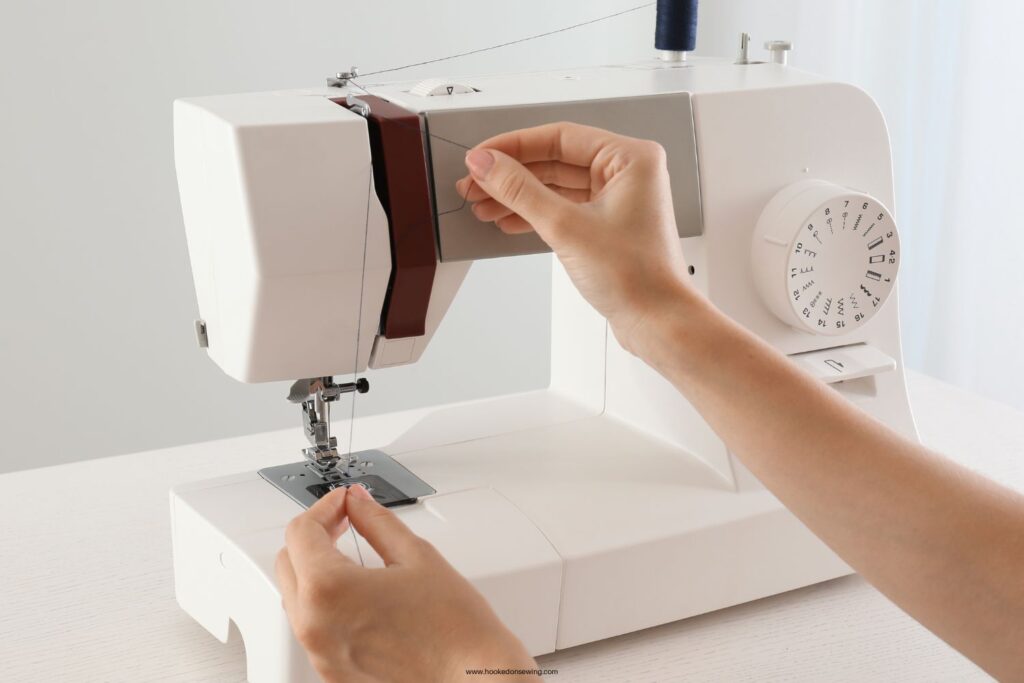
Tip 3: Always Pull Threads Forward Through Your Machine
When you need to change threads in the top of your sewing machine, don’t pull the thread backwards through your machine. Pull the thread backwards can cause lint to come off your thread and build up in your machine. Instead, simply snip the thread at the spool and pull the thread from the needle through the machine.
Tip 4: Use the Correct Bobbins
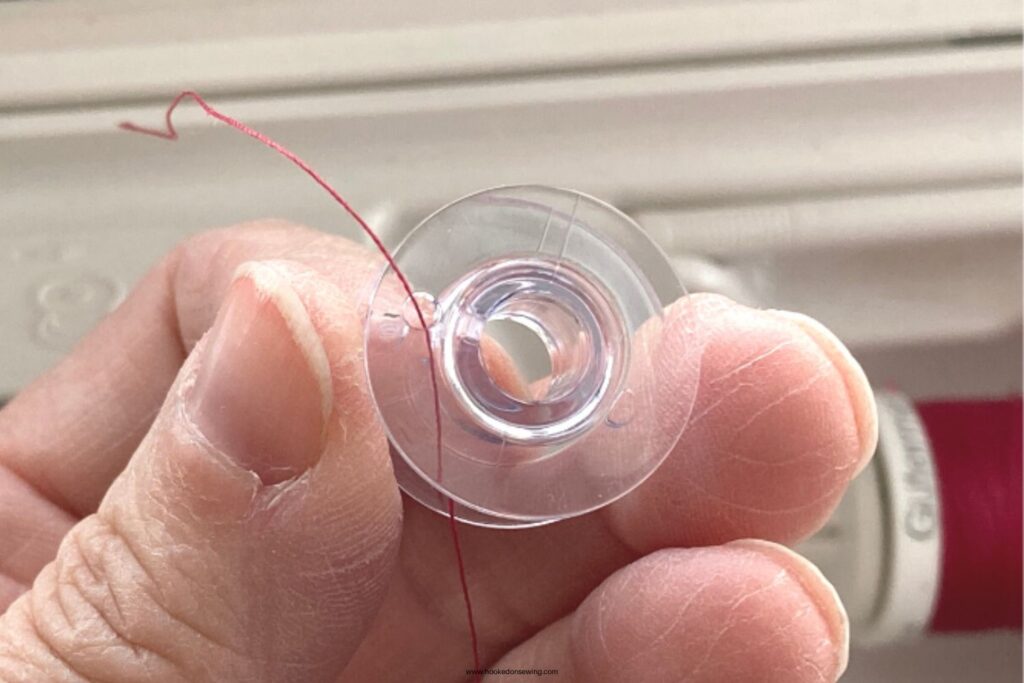
Did you know there are different types of bobbins? Again, refer to your sewing machine manual to verify the type of bobbin your machine requires. Bobbins may fit in your machine, but that doesn’t mean it’s the correct bobbin. Using an incorrect bobbin can cause damage to your machine, broken needles, and more frustration than you want or need.
Tip 5: Turn the Handwheel Towards You
When you need to manually raise or lower your sewing machine needle, ALWAYS turn the handwheel towards you. If you carefully read your manual, you’re likely to find instructions telling you to always turn your handwheel towards you.
Turning your handwheel away from you/backwards/the wrong way can mess up the timing in your machine.

Tip 6: Lower the Presser Foot
Get in the habit of always checking to make sure your presser foot is lowered before you start sewing. Ideally, you would place your fabric under the presser foot, then immediately lower the presser foot. If you want to make sure the fabric doesn’t move, you can also lower the needle.

Tip 7: Use the Right Needle
The right needle makes a big difference. You can read all about the different types of needles here. Using the right needle for your project can make a BIG difference. You should also change your needle frequently.

Tip 8: Keep it Clean
Performing regular maintenance on your machine is imperative for its longevity. Cleaning includes removing lint, dust, and thread, as well as oiling your machine regularly. You have moving metal parts and those parts need to be oiled for your machine to run properly. And to prevent damage (and costly repairs).

Tip 9: Master the Straight Stitch
If you are going to elevate your sewing, you have to learn to sew accurate and consistent seams. It doesn’t matter if you’re sewing garments or piecing fabric for a quilt, or even sewing home decor items. It is important that you’re able to sew an accurate seam. Whether that seam is a 1/4″, 1/2″, or 5/8″. Practice, practice, practice.

Tip 10: Familiarize Yourself with Stitch Options
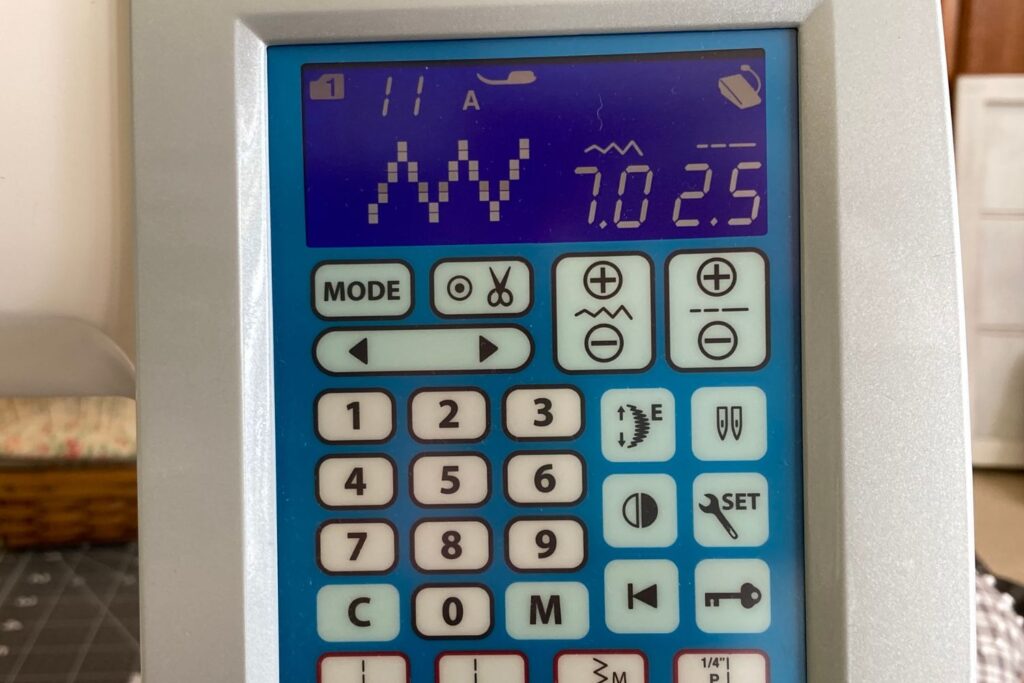
Unless you are sewing on a straight stitch machine, your sewing machine probably has multiple stitch options. Take the time to go through the stitches, learn how and when they are used and actually practicing sewing the stitches.
I like to use an 8-1/2×11″ piece of felt and use it to create a stitch sampler.
Tip 11: Thread Your Machine Correctly
One of the most common problems is an incorrectly threaded sewing machine. Whenever you find your machine stitching incorrectly or thread breaking, one of the first things you should do is to re-thread your sewing machine. This step alone will solve a slew of problems.

Tip 12: Use Good Quality Thread
I was surprised when I switched from using the cheapest thread I could find to using a better quality thread. I noticed immediately how much less lint was collecting in my bobbin area. I also had less thread breaking, splitting and problems in general with my sewing.
I now mostly use Gutermann thread. I also use Superior and Aurifil with much success.

These tips for using your sewing machine will become second nature when you implement them on a regular basis.
More Sewing Tips
If you found these sewing tips helpful, you might also find the following sewing tips helpful:


Than You. 🙂
Does thread get too old to use? I have a lot of thread that was my mother’s. 20+ years old.
Thank you!
Yes! As a general rule, thread manufacturers recommend not using thread that is more than five years old. Thread can fade, deteriorate, become brittle, and lose elasticity.
However, there are ways to extend the life of the thread. Such as keeping the thread out of direct sunlight, storing in an airtight container, and even using thread conditioner.
So, it is possible your mother still has some usable thread. Assuming it was stored to preserve the life of the thread.
I hope this helps!!